Atlas 9560 · AOV Quad-Lens Solar 4G
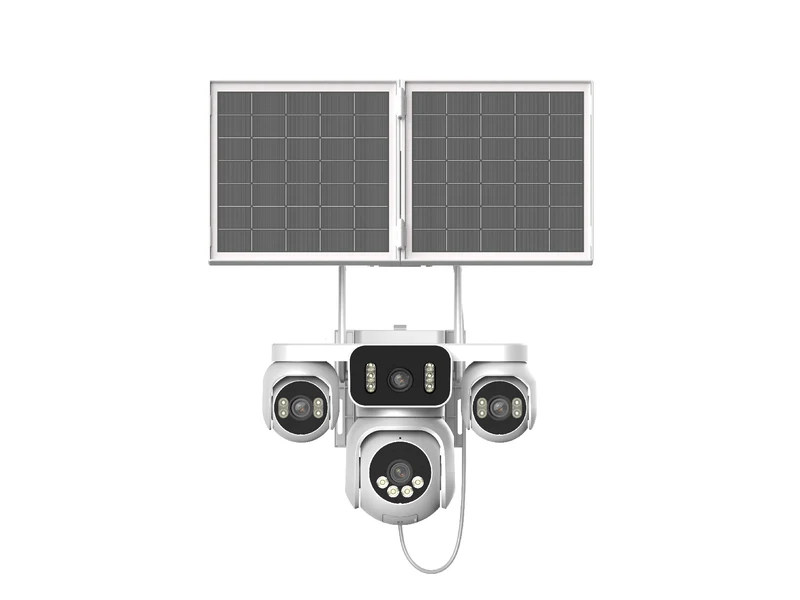
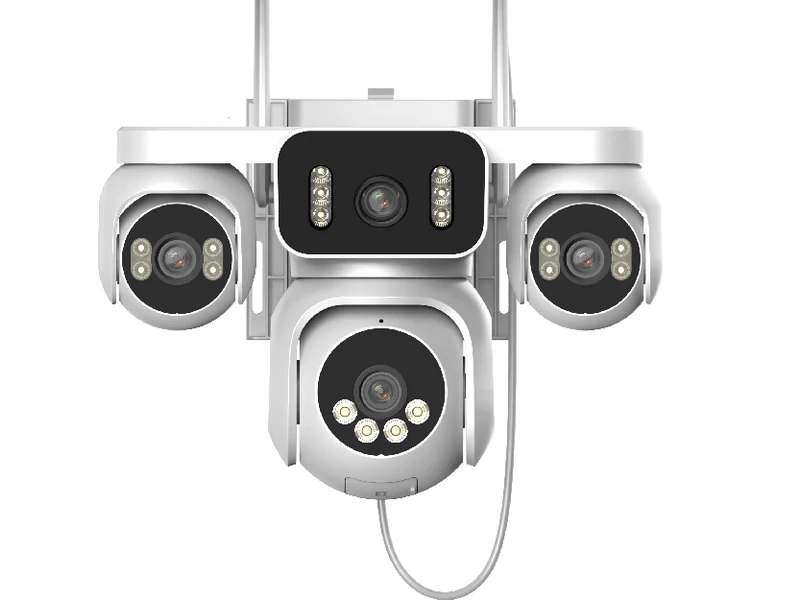
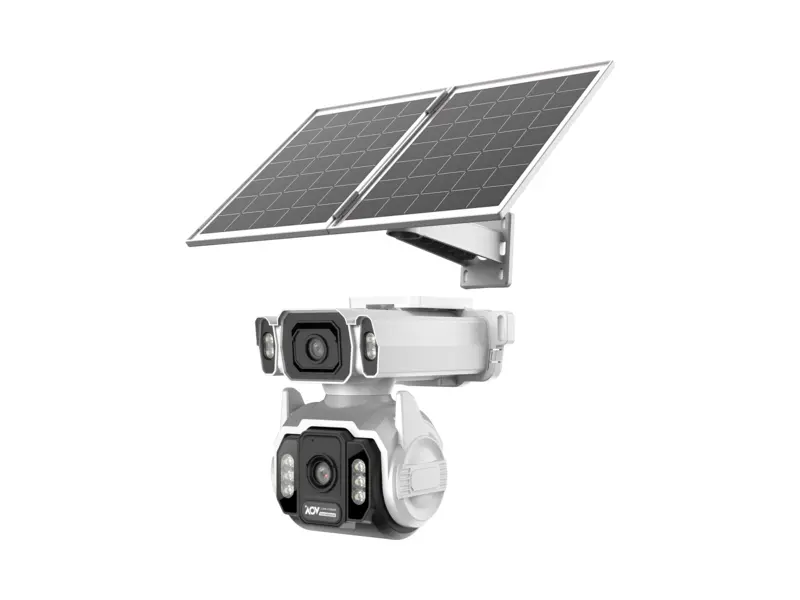
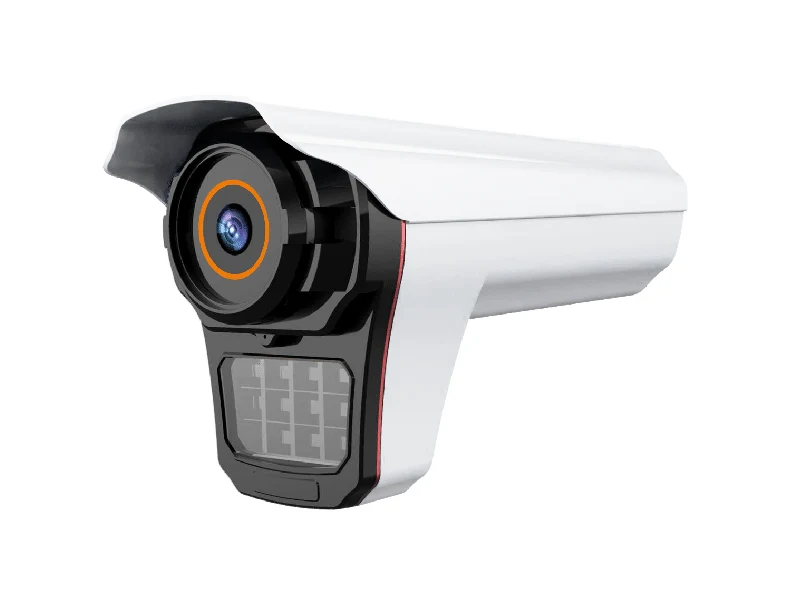
Four lenses on one solar head: three wide-view cameras watch the whole scene while the PTZ ball catches detail and tracks people. It runs on a 3.7 V battery with solar charging and sends video over 4G — no mains power, no network cable.
Lead time · In stock: at your forwarder’s China warehouse 3 days after payment · Not in stock: 7–15 working days · Then air 5–10 days / sea 25–45 days to your port
Terms · Sample orders welcome · Quotation / PI fixes models, prices, Incoterms (EXW or FOB, each quoted separately), lead time and T/T payment · Defective units: free spare units agreed per order (quantity depends on order size) and written into the quotation · Warranty: up to 5 years on Zhongxin Shutong industrial switches, manufacturer warranty on other brands · Full terms, warranty & RMA
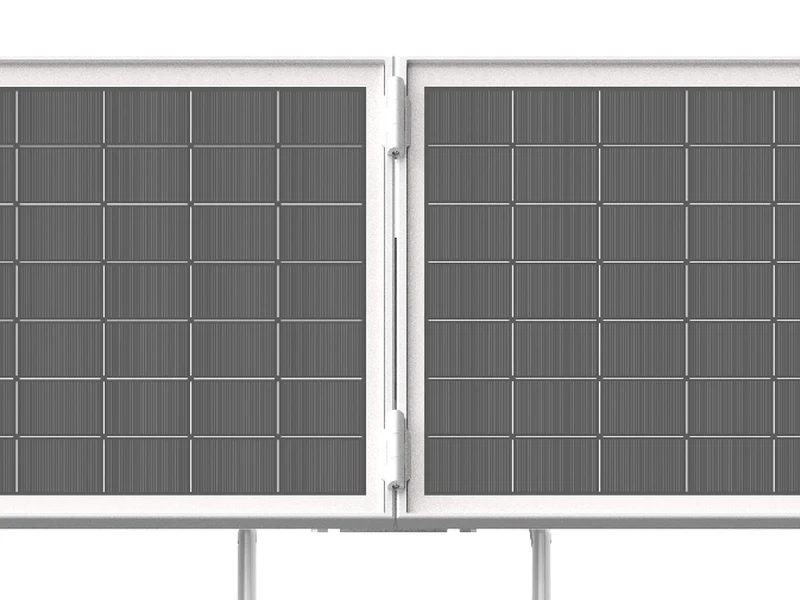
Need the PDF datasheet? Get it on WhatsApp →The Atlas 9560 puts four cameras on a single solar-powered head, driven by the XF5H quad AOV mainboard with a 1.0T-compute AI controller. Three fixed short-focal lenses cover a wide area with no blind angle between them, while the pan-tilt ball uses a longer focal length for detail capture and human tracking with guard position and auto-calibration. All four channels encode 1920×1080 at H.265+, which keeps both TF-card storage and 4G data consumption low. Human detection reaches 40 m at a stated 99.88% accuracy; the camera records 24 h in low-power AOV mode and switches to full-frame recording within 50 ms of a detection, with sound-and-light alarm through the dual-light board and four night modes (B/W, full-color, smart, starlight). Power is a 3.7 V lithium battery charged by the solar panel; recordings go to a TF card up to 256 GB or cloud storage, and the app offers 17 interface languages with QR-code device adding and triple drop-line protection on the 4G link.
Is this the right camera for your site?
Plain-language guide — based only on what this product actually does.
- Continuous full-frame 24/7 recording at high frame rate — a mains-powered PoE camera (see the H series) is the right tool
- A site that already has stable mains and Ethernet — wired PoE costs less and never depends on sunshine
- 4K forensic detail on a single lens — the 8 MP H8P option on the H series page delivers that
Worried about the source? Order under your own company name.
Using your own freight forwarder? No problem.
Key Features
The complete series capability list.
Who uses it, where it goes and how to install it
Written for the Atlas 9560 solar 4G camera from its own specifications: 4 × 1080P channels (3 wide lenses + 1 PTZ ball), 40 m human detection, 3.7 V battery with solar charging, LTE-FDD B1/B3/B5/B8 and LTE-TDD B34/B38/B39/B40/B41 (Asia version; EU and US versions with other bands are available), TF card up to 256 GB.
Who it is for
- Large farms and ranches off the grid — Three wide lenses watch a whole yard, gate and feed store from one pole while the PTZ ball follows a person — more ground per pole than the dual-lens 9562.
- Construction sites and machinery yards — Temporary sites with no power or internet: human detection to 40 m triggers the sound-light alarm and full-frame recording within 50 ms, and the unit moves to the next site with its pole.
- Pump stations, towers and remote assets — Fenced compounds where several approach paths must be seen at once; the −20 °C to 70 °C operating range suits hot, sun-exposed sites.
- Installers serving rural clients — QR-code adding, auto-connection to the server on power-up, triple drop-line protection and fault self-diagnosis cut return trips; the HiEasy app has 17 interface languages for handover.
Where and how to install
- Pole height and the three wide lenses — Mount the head at about 3–3.5 m so the panel and lenses are out of reach. Point the three fixed lenses so their views meet over the area you care about most, and keep the nearest ground in view so a person walking under the pole is still seen.
- Solar panel: face the equator, no shade — Face the panel south in the northern hemisphere and north in the southern hemisphere, tilted at roughly your latitude (at least 10–15° near the equator so rain washes off dust). Check that no tree, roof or the camera head shades it between about 9:00 and 15:00.
- Guard position for the PTZ ball — Save the main gate or door as one of the 6 presets and set it as the guard position, so the ball returns there after tracking a person. Run position calibration after mounting the head.
- Check 4G signal at the mounting point — Test the signal at the real height and spot before drilling: a few meters and a wall or hill can change it. Keep the head away from metal roofs and tanks that block the radio, and use a SIM whose data plan you can top up and query from the camera.
- Speaker, microphone and cable joints — Audio in and out are external: use an 8 Ω speaker of at most 2 W and an analog microphone, mounted where wind and rain do not hit them directly. The page lists no IP rating, so seal every connector and keep a drip loop on each cable.
Four channels: storage, 4G data and power figures
The page gives no focal lengths or view angles for the four lenses, so this table works with what it does give: 1920×1080 at 10 fps and 135–2048 kbps per channel, a 256 GB TF card and a 430 mA working current at 3.7 V. Real AOV recording runs at a low frame rate most of the day, so actual card time lies between the two bitrate rows.
| Per channel | All 4 channels | |
|---|---|---|
| Resolution · frame rate | 1920×1080 · 10 fps | 4 × 1920×1080 · 10 fps |
| Video bitrate | 135–2048 kbps | 540–8192 kbps |
| Recorded per day at 2048 kbps | 22.1 GB | 88.5 GB |
| Recorded per day at 135 kbps | 1.5 GB | 5.8 GB |
| Days on a 256 GB TF card at 2048 kbps | 11.6 | 2.9 |
| Days on a 256 GB TF card at 135 kbps | 175.6 | 43.9 |
| 4G data for 1 hour of live view | 61–922 MB | 243 MB–3.7 GB |
| Power at working current (3.7 V × 430 mA) | — | 1.6 W |
| Charge used in 24 h if that current ran non-stop | — | 10.3 Ah · 38.2 Wh |
- Plan the TF card for the worst case: if all four channels record at the top bitrate, a 256 GB card holds about 2.9 days before it overwrites.
- Keep remote viewing short and on one channel at a time: one hour of all four channels at 2048 kbps uses about 3.7 GB of SIM data.
- The page lists no battery capacity or panel wattage: send us your location and expected detections per day so we size them, rather than relying on the 1.6 W figure alone.
Data = bitrate × time ÷ 8 (1 GB = 1000 MB); card days = 256 GB ÷ data per day; power = 3.7 V × 430 mA. Card figures ignore file-system overhead on the FAT32 card.
Full Specifications
Series specifications — technical values in English.
System
| Model | 9560 — AOV quad-lens solar 4G camera |
| Mainboard | XF5H (4G low-power quad-lens AOV module) |
| Main processor | High-performance dual-core, 1.0T AI compute |
| Operating system | Embedded Linux |
Video
| Image sensor | 4 × 1/3″ CMOS |
| Video compression | H.265+ |
| System format | PAL 50 Hz / NTSC 60 Hz |
| Effective resolution | 1920×1080 (2 MP) per channel |
| Frame rate | 10 fps |
| Video bitrate | 135–2048 kbps |
| Min. illumination | Day mode 1 Lux · Night mode 0.01 Lux |
| Day/Night modes | B/W · Full-color · Smart · Starlight |
| Snapshot | Supported |
4G Network
| Asia / China version (standard) | LTE-FDD B1 / B3 / B5 / B8 · LTE-TDD B34 / B38 / B39 / B40 / B41 |
| EU version | LTE-FDD B1 / B3 / B5 / B7 / B8 / B20 / B28 |
| US version | LTE-FDD B2 / B4 / B5 / B7 / B12 / B13 / B66 / B41(38) |
| Latin America / Japan / Korea | Dedicated module versions, band list confirmed per order |
| Data top-up & query | Supported |
Audio
| Audio codec | G.711U |
| Audio input | External analog MIC, SNR −42 dB |
| Audio output | External 8 Ω / MAX 2 W speaker |
| Voice call | Full-duplex two-way talk |
Recording & Alarm
| Recording modes | AOV recording · Human-triggered recording |
| Recording storage | TF card / cloud storage |
| TF card capacity | Up to 256 GB (FAT32) |
| Alarm detection | Human detection |
| Sound-light alarm | Supported (with dual-light board) |
| Alarm voice | Built-in alarm voice prompts |
| Alarm linkage | Recording · Snapshot |
PTZ & App
| Presets | 6 positions |
| Guard position | Supported |
| Position calibration | Supported |
| Tracking | Human tracking |
| Mobile app | HiEasy — 17 interface languages |
Power & Physical
| Power supply | 3.7 V lithium battery · solar panel charging |
| Working current | 430 mA ±10 mA |
| Operating environment | −20 °C to 70 °C |
| Mainboard size | 62.93 × 43.94 mm |
| Sensor board | 38×38 mm or 32×32 mm |
| Power board | 55 × 12 mm |
| ICR / lens hole pitch | 20 mm |
Quad-Lens Solar 4G Camera FAQ — Atlas 9560
Which SIM card and 4G bands does the Atlas 9560 use?
Can it run fully off-grid on solar power?
How are the four lenses arranged and at what resolution?
How far does it detect people, and what about night?
Will it survive high heat, and can I talk through it?
How can I check which 4G bands are used at my site before ordering the Atlas 9560?
Which way should the Atlas 9560 solar panel face, and how does it cope with cloudy days?
How much SIM data does the Atlas 9560 use with four lenses?
How do I view the four lenses of the Atlas 9560 — phone app, PC or NVR?
Will the Atlas 9560 alarm on vehicles, animals or moving branches?
Is the Atlas 9560 solar camera the same as the Atlas 9560 Quad WiFi?
Which 4G version of the Atlas 9560 should I order for my country?
Will it work with my local 4G carrier?
Ordering questions — samples, shipping, payment, lead time and genuine stock — are answered once on our FAQ page.
Related Products


Request a quote for this product
An engineer replies within 24 hours on working days with model check, price and lead time. No obligation, no newsletters.
Product: Atlas 9560 · AOV Quad-Lens Solar 4G
For a fast, exact quote tell us: model or requirement · quantity · destination country / port · EXW or FOB · deadline.